Introduction
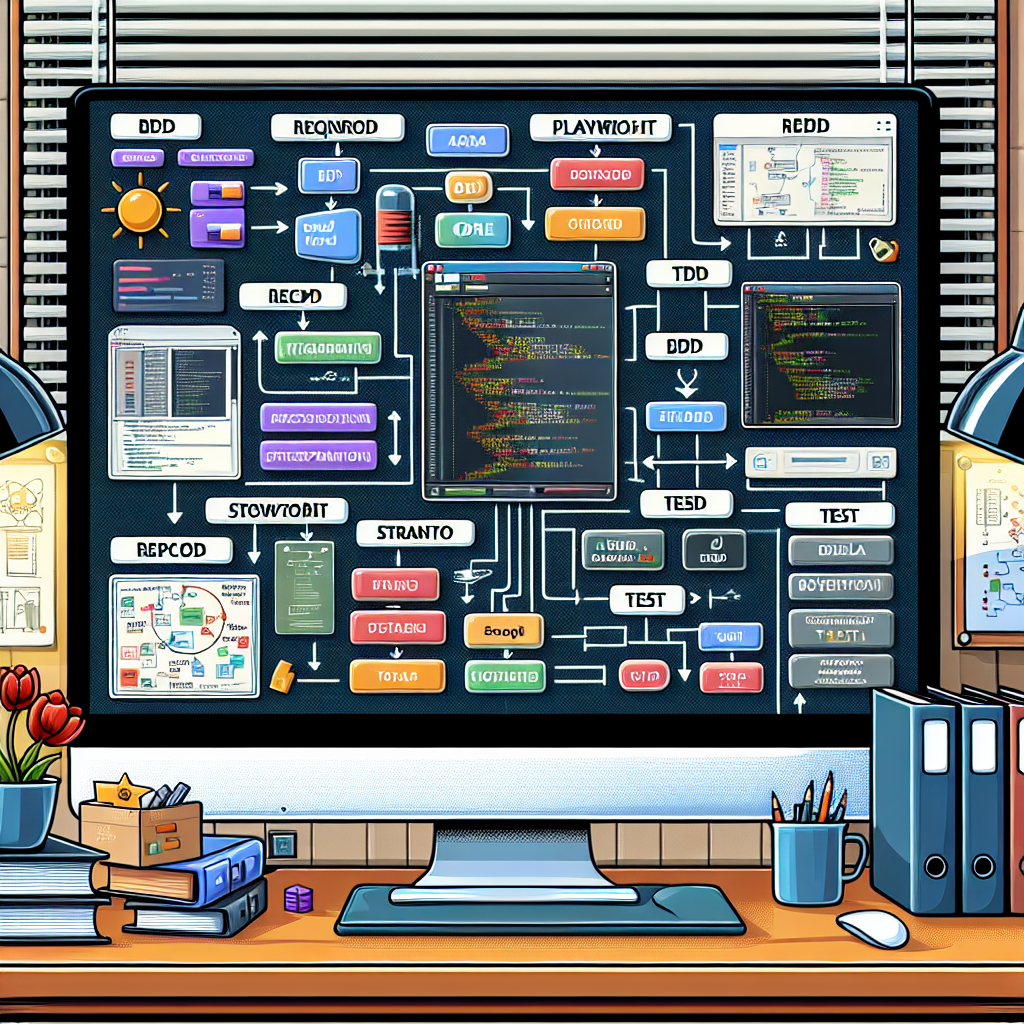
In the modern era of software development, maintaining high-quality code while ensuring swift delivery can be a challenging task. Fortunately, methodologies like Behavior-Driven Development (BDD) and Test-Driven Development (TDD), along with tools like ReqNRoll, Playwright, and Test Containers, offer structured ways to achieve this. We will delve into these strategies and demonstrate their integration within a ReactJS, .NET 8, and MSSQL setup.
Understanding BDD and TDD
BDD - Behavior-Driven Development
Behavior-Driven Development (BDD) is an agile software development methodology that encourages collaboration among developers, testers, and non-technical stakeholders. BDD focuses on creating clear, business-centric specifications in the form of user stories and behaviors. This ensures a shared understanding of the project requirements and expected outcomes.
TDD - Test-Driven Development
Test-Driven Development (TDD) is a software development technique where tests are written before the actual code. TDD follows a simple cycle: write a test, make it pass, and refactor the code. This iterative process helps in catching issues early, promoting cleaner code, and maintaining a robust suite of automated tests.
Key Technologies
ReqNRoll
ReqNRoll is an open-source BDD test automation framework for .NET projects. It has a cucumber-style approach and replaces the SpecFlow project, offering advanced features for writing clear and maintainable tests.
Playwright
Playwright is a powerful test automation framework developed by Microsoft, enabling reliable end-to-end testing for modern web applications across multiple browsers such as Chromium, Firefox, and WebKit. It supports parallel test execution, automatic waiting, and extensive browser context APIs.
Test Containers
Testcontainers is a free, open-source library that enables the management of Docker containers for testing purposes. It simplifies integration testing by allowing real instances of dependencies, such as databases and message brokers, to be spun up in isolated containers directly from the test suite.
ReactJS
ReactJS is a popular JavaScript library for building user interfaces. Its component-based architecture and unidirectional data flow make it a go-to choice for developing scalable, robust front-end applications.
.NET 8
.NET 8 is the latest iteration of Microsoft's cross-platform development framework. It brings numerous improvements, including Native AOT, enhanced Blazor navigation, and expanded runtime optimizations.
MSSQL
Microsoft SQL Server (MSSQL) is a powerful, enterprise-grade relational database management system (RDBMS) that serves as the backend for many applications. Its robust features include built-in AI, vector search capabilities, and compliance standards.
Integration Steps
Setting Up the Environment
-
ReactJS: Initialize a ReactJS project using
create-react-app.npx create-react-app my-app cd my-app npm start -
.NET 8: Create a new .NET 8 project.
dotnet new webapi -n MyApp cd MyApp dotnet run -
MSSQL: Set up MSSQL Server using Docker.
docker run -e 'ACCEPT_EULA=Y' -e 'SA_PASSWORD=Your_password123' \
-p 1433:1433 --name sql1 -h sql1 \
-d mcr.microsoft.com/mssql/server:2019-latest
Installing and Configuring ReqNRoll
Install ReqNRoll by adding the necessary NuGet packages to your .NET project.
dotnet add package Reqnroll
Configure ReqNRoll in your test project to enable BDD-style scenarios.
Playwright Setup
Install Playwright in your ReactJS project.
npm install @playwright/test
npx playwright install
Create Playwright test scripts to automate your end-to-end scenarios.
Utilizing Test Containers
In your .NET project, install the Testcontainers NuGet package.
dotnet add package Testcontainers
Create integration tests that spin up real instances of MSSQL for testing.
Best Practices
-
Clear and Maintainable Tests: Write clear, concise tests that are easy to understand and maintain. BDD frameworks like ReqNRoll help with this by allowing natural language specifications.
-
Automate Early and Often: Continuously integrate and automate tests to catch defects early and ensure consistency throughout the development lifecycle.
-
Isolate Dependencies: Use Testcontainers to isolate dependencies, ensuring your tests are not affected by external factors and providing a more reliable testing environment.
-
Parallel Execution: Leverage the parallel execution capabilities of Playwright to speed up your test suite and make the most of available resources.
-
Collaboration and Communication: Foster collaboration between developers, testers, and stakeholders by using BDD to bridge the communication gap and align on project goals.
Conclusion
By integrating BDD, TDD, ReqNRoll, Playwright, and Test Containers in your ReactJS, .NET 8, and MSSQL setup, you can significantly enhance your development workflow, catch defects early, and ensure high-quality software. These practices and tools provide a robust framework to manage testing complexities, making your development process more efficient and reliable.
Comments & Discussion
Comments powered by GitHub Discussions. If comments don't load, please ensure:
You can also comment directly on GitHub Discussions