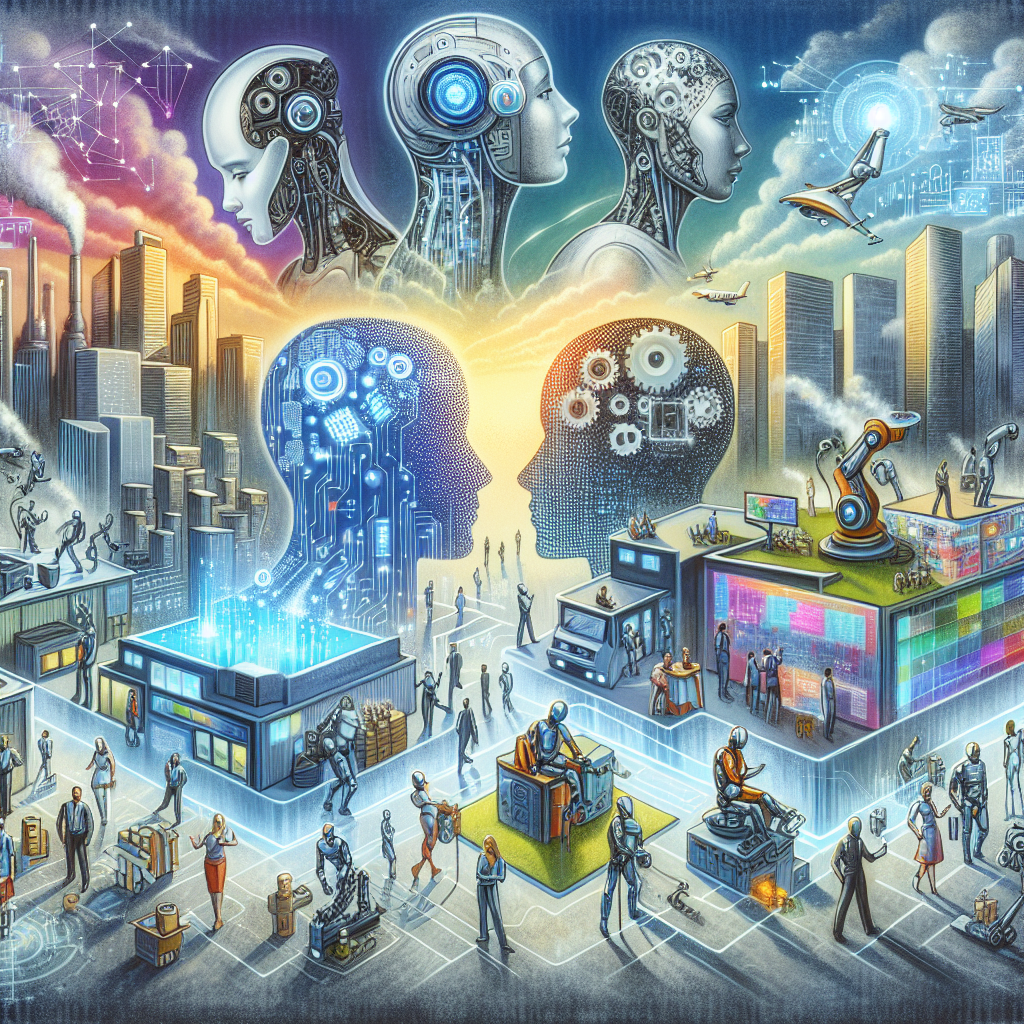
The integration of Artificial Intelligence (AI) into our workplaces is no longer a futuristic concept; it's a present reality fundamentally transforming the global job market. While headlines often focus on the fear of automation leading to mass unemployment, the full picture is far more nuanced, involving both significant job displacement and the exciting creation of entirely new roles.
A Complex Transformation: More Jobs, Different Jobs
The overall impact of AI and automation on job numbers is projected to be complex. According to the World Economic Forum, a staggering 85 million jobs may be displaced by 2025 due to these technologies. However, during the same period, an estimated 97 million new roles are expected to emerge globally. This suggests a potential net positive in the sheer number of jobs, but highlights a crucial shift: the types of jobs available and the skills required to perform them are changing dramatically.
Where AI is Displacing Jobs
AI is particularly effective at automating tasks that are routine, repetitive, and data-driven. Jobs most susceptible to displacement often involve:
- Routine Cognitive Tasks: Handling data processing, performing basic analysis, and making rule-based decisions.
- Structured Physical Work: Repetitive manual tasks performed in controlled environments.
- Basic Customer Service: Answering standard inquiries and providing routine information.
We're already seeing this play out across various industries:
- Banking: AI-powered ATMs and chatbots are taking over roles traditionally held by bank tellers. AI is also being used to review complex documents that previously required extensive human hours.
- Manufacturing: Robots are increasingly replacing factory workers to boost efficiency and reduce manufacturing defects.
- Transportation: Advances in self-driving technology are paving the way for automated vehicles, including long-haul trucks.
Specific sectors are expected to see significant displacement rates by 2025, including:
- Transportation (50%)
- Customer Service (40%)
- Retail (30%)
- Financial Services (28%)
- Manufacturing (20%)
The Rise of New AI-Driven Careers
While some jobs disappear, AI is simultaneously acting as a catalyst for the creation of brand new career categories. These roles often didn't exist just a few years ago and represent significant future opportunities.
Emerging roles in the AI economy include:
- AI Ethics Officers: Ensuring AI systems are developed and used responsibly and ethically.
- Human-AI Collaboration Specialists: Designing and optimizing workflows where humans and AI work together effectively.
- AI Trainers: Teaching AI systems to understand complex concepts, context, and human values.
- Data Scientists and Machine Learning Engineers: The core roles focused on building and maintaining AI systems.
- Domain-Specific AI Specialists: Applying AI technologies and insights within particular industries like healthcare, finance, or agriculture.
Demand for AI-related skills and jobs is already soaring. AI specialist roles have shown remarkable annual growth (e.g., 74% annually according to LinkedIn), and the overall demand for jobs related to AI is projected to increase dramatically (e.g., by 300% from 2020 levels by 2025).
Navigating the Transition: Skills for the AI Age
For both individuals and organizations, successfully navigating this transition is key to thriving, not just surviving.
- For Organizations: Strategic AI implementation isn't just about replacing workers; it's about reallocating human talent to higher-value activities that require creativity, critical thinking, and interpersonal skills – areas where humans currently excel over AI.
- For Individuals: If your role involves tasks at high risk of automation, focusing on developing complementary skills is crucial. Instead of trying to compete directly with AI, learn how to work alongside AI systems. This could involve skills in managing AI tools, interpreting AI outputs, ethical considerations, or applying domain expertise that AI systems lack.
Conclusion: Collaboration is Key
The future of work isn't likely to be a battle between humans and machines, but rather a partnership. While AI will undoubtedly automate routine tasks, it will also augment human capabilities and create new frontiers for innovation and employment. Success in the AI age will depend on adaptability, continuous learning, and a willingness to embrace roles that emphasize human-AI collaboration and the uniquely human skills that complement artificial intelligence.
Preparing for this future means understanding the shifting landscape and proactively developing the skills needed to work effectively in an increasingly AI-augmented world.
Comments & Discussion
Comments powered by GitHub Discussions. If comments don't load, please ensure:
You can also comment directly on GitHub Discussions